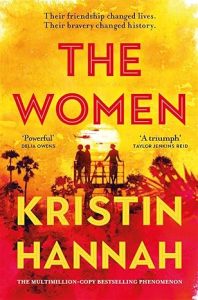
 The year got off to a cracking start with The Women by Kristin Hannah. The protagonist, Californian Frances McGrath, leaves her comfortable middle-class life to serve as a nurse in the Vietnam War. The first half of the novel is a vivid portrayal of the horrors of Vietnam from the point of the view of the medical teams on the ground. The second half focuses on the psychological difficulties of readjusting to civilian life and the struggle women faced for their contribution to be recognised when most Americans believed there hadn’t been any women in Vietnam.
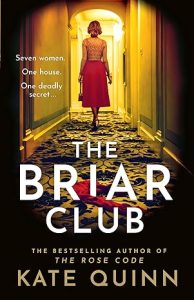 Kate Quinn is one of my favourite historical novelists. Set in 1950s America at the height of McCarthyism, The Briar Club follows a group of women who rent rooms in a boarding house in Washington DC. The mysterious Grace March befriends everyone in the house but never reveals anything about herself. The women get to know each other when Grace initiates a Thursday night dining club. Each woman has her own point-of-view chapters where we learn about her secrets and difficulties. Imaginatively, the house itself also gets short point-of-view chapters where we discover there has been a murder but we don’t know who has died or who the killer is. This book is great fun while also exploring the anti-communist paranoia of 1950s America.
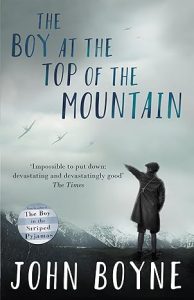 John Boyne is superb when it comes to taking a fresh perspective on well-known historical events. The Boy at the Top of the Mountain tells the story of Pierrot, born to a French mother and German father. His best friend, Anshel, is Jewish. Orphaned at a young age, Pierrot lives in an orphanage in Orleans until his aunt takes him to live with her at the Berghof on the Obersalzberg where she is Hitler’s housekeeper. Pierrot, now renamed Pieter, falls under Hitler’s spell with tragic consequences. It’s a deceptively simple story about big themes: the corruption of innocence, complicity, and the need to acknowledge the past.
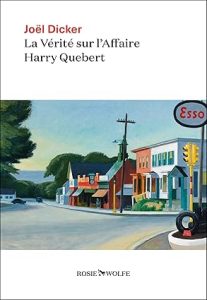
One of my goals this year was to read books in French and German. I came across L’Énigme de la chambre 622 by Swiss author Joël Dicker on a French podcast. It sounded interesting so I gave it a try. I’m so glad I did. Dicker writes wonderfully absorbing mysteries which are very readable and much easier than the tomes of 19th-century literature I used to plough through as a student. I followed L’Énigme with La Vérité sur l’Affaire Harry Quebert set in America. Pacy, fun, and intricately plotted, these were two of the best books I read all year.

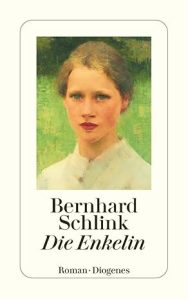
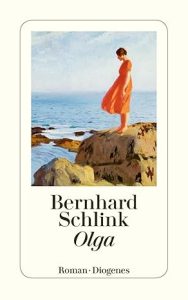
For my German reads, I returned to a favourite author, Bernhard Schlink. Best known for The Reader (Der Vorleser) Schlink explores recent German history in his novels. Die Enkelin (The Granddaughter) tells the story of Kaspar who, as a student, enables his girlfriend to escape from East Berlin. Years later after Birgit has died, he discovers that she left behind a baby daughter. That child is now married with a daughter of her own, Sigrun. They are living in a völkisch community in the former East Germany. The novel is about Kaspar’s relationship with his step-granddaughter, the effects of German reunification on the former GDR, and the rise of far-right movements. This is a profound book which is both chilling and deeply moving. Olga is the story of a woman growing up in Prussia at the turn of the 20th century. Her lowly social status prevents her from marrying Herbert, the man she loves. Meanwhile, Herbert is off conquering German South West Africa and the North Pole where he goes missing. Leading a quiet life, much of the twentieth century appears to pass her by, until we discover just how emotionally embroiled she is in Germany’s history.
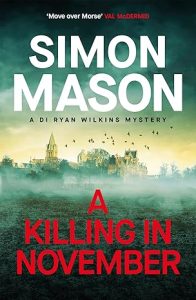
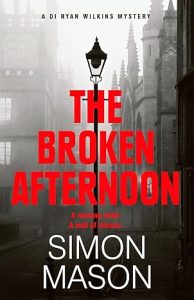
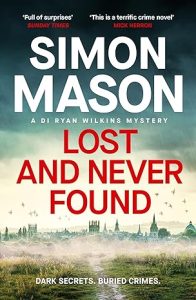
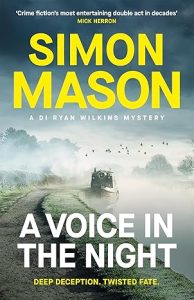
Steve and I had the pleasure of hearing Simon Mason speak at an event in west Oxford. It was fascinating to hear about his writing and publishing journey. His mystery books set in Oxford are unusual in having two detective inspectors, DI Ryan Wilkins and DI Ray Wilkins, who could not be more different to each other. Ray is Oxford educated, good with people and social situations. Ryan is also from Oxford but from the ‘wrong end’ having grown up in a trailer park. He wears tracksuits and is often rude and obnoxious. Nevertheless, Ryan possesses a keen wit and sharp perspicacity that gives him the edge when it comes to solving complex cases. Much of the enjoyment in these books comes from the detectives’ strained relationship and grudging respect for each other. The writing is razor sharp.
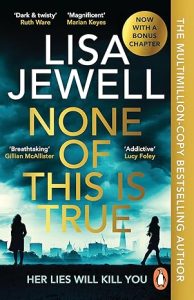 Being shortlisted for a literary prize is a mark of success for an author. But so also is being stocked in supermarkets. No prizes for guessing which ones are selling the most books. I read a few of the books on the shortlist for the Women’s Prize for fiction in 2025 but none of them have made it into this blog post. Maybe that says something about me! But there’s a reason why people like Lisa Jewell are popular enough to be in Tesco’s. She writes utterly page-turning thrillers that explore complex human psychology.
 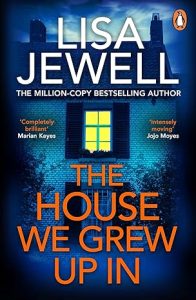 There’s a misconception that literary novels are about character and genre fiction is about plot. This is nonsense. All good fiction is about character. However, literary fiction authors (sometimes) think they can get away without a plot. Genre fiction authors understand that the plot keeps readers turning the pages. The best books have well-drawn characters, a well-structured plot, and great writing. Lisa Jewell is brilliant at all three. None of This is True follows Alix, a successful podcaster, and Josie who wants to tell her story and inveigles her way into Alix’s life. It’s tense and thrilling with plenty of twists and turns. The House We Grew Up In is about a hoarder and the effect her behaviour has on her family. It’s skilfully done and helped me understand the hoarder’s perspective even though I couldn’t imagine anything worse.
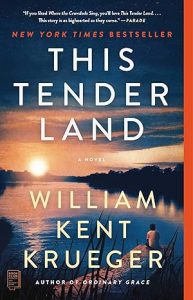 I discovered William Kent Krueger last year when I read Ordinary Grace. I love his books which are so full of warmth, humour and wisdom. This Tender Land follows four orphans who escape from an Indian Training School in Minnesota in 1932 and make their way to St Paul and eventually St Louis by canoe. It’s a beautiful book about the search for one’s place in the world. The narrator is a 12-year-old boy who gets himself into quite a few scrapes but always comes out on top in the end. His companions are his older brother, a Sioux Indian boy who had his tongue cut out as a child and only communicates with sign language, and a six-year-old girl. They are pursued by the cruel headmistress of the school – the Black Witch – and her husband. One of the best coming-of-age novels I’ve read.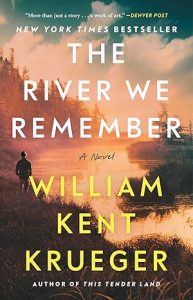
The River We Remember is set in a small town in Minnesota in 1958. When an unpopular land owner is found dead in the Alabaster River, a Native American is suspected of his murder and arrested. Many of the characters carry the scars of World War II. Brody, the sheriff, and Angie, the café owner, are burdened by their own secrets. There are a couple of teenagers who get embroiled in stuff way over their heads. Krueger is especially good at weaving in local legends and his deep love of the landscape shines through.
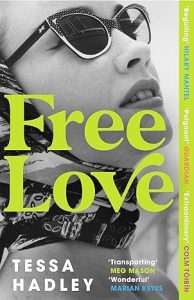 On the theme of love, I enjoyed Free Love by Tessa Hadley and Four Letters of Love by Niall Williams. Set in 1960s London, Free Love follows Phyllis who is married to Roger, a civil servant in the Foreign Office. They have two children, Colette and Hugh. They couldn’t be more respectable and middle-class. One day Nicky, the adult son of some friends, comes to dinner. Nicky is young and radical and, in a moment of passion, Phyllis kisses him. This moment changes her forever and she embarks on a life of free love in hippy London. The novel explores the effect this has on herself, on Colette, and to a lesser extent on Roger and Hugh. There’s a final twist at the end.
 Four Letters of Love has two, seemingly unconnected, perspectives. Nicholas is growing up in Dublin. When his father announces that he is leaving his civil service job because God wants him to paint, the family is thrown into a life of poverty. Isabel is growing up on an island west of Galway. Following a tragedy, for which Isabel blames herself, she is sent to school on the mainland, boarding with nuns. The book explores themes of love and guilt. Characters either believe God is speaking to them, or wait in vain for a sign from God telling them what to do. The writing is superb.
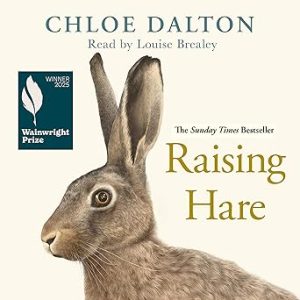 I didn’t listen to many audiobooks this year because I discovered The Rest is History podcast and now spend most of my time listening to Dominic Sandbrook and Tom Holland. But I did enjoy Raising Hare: A Memoir by Chloe Dalton. During lockdown Chloe is living in an isolated cottage when she finds an injured leveret on the road. Not wishing to interfere with nature, she leaves it. But when it is still there hours later she takes it home and cares for it. She never tries to tame it, but there develops, nevertheless, an astonishing bond between Chloe and the animal. The author explores the history and mythology of hares. She also writes beautifully about nature and wildlife.